
What every prospective laser user needs to know before assuming their setup is “good enough”
If you’re using or considering using, a laser engraver or cutter, there’s a good chance you’ve asked yourself: “Do I really need a fume extractor?”
It’s a fair question. After all, if your workspace doesn’t smell too bad and you’ve got a fan or window nearby, it might seem like you’re covered.
But here’s the reality: laser processing produces more than just visible smoke. It generates a complex mix of respirable dust and volatile organic compounds (VOCs), many of which are invisible, odorless, and potentially harmful over time.
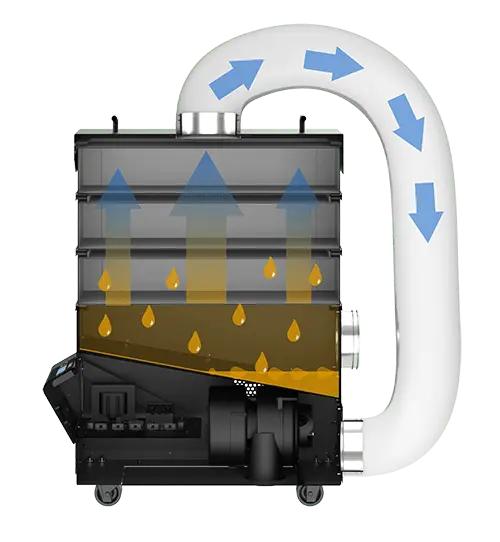
A properly designed laser fume extractor or fume extraction system doesn’t just move air, it captures contaminants at the source, filters them, and returns clean air back into your environment. That’s a very different outcome than simply pushing fumes around.
Let’s break down the most common myths that lead people to underestimate the importance of proper air extraction and what you should know instead.
Myth #1: “If You Can’t Smell It, It’s Safe”
This is one of the most dangerous assumptions in any workspace.
Your sense of smell is not a reliable safety tool. In fact, your brain can adapt to persistent odors, making them seem less noticeable over time, commonly referred to as noseblind. Even worse, many hazardous gases and ultrafine particles are completely odorless.
That means you could be breathing in harmful contaminants without any warning signs.
The truth:
A lack of smell does not mean clean air. A high-quality laser marking fume extractor is designed to capture both visible and invisible pollutants, especially those you can’t detect.
Myth #2: “A Fan or Open Window Is Enough”
It might feel like airflow equals safety, but it doesn’t.
A fan or open window may move air around, but it does not remove harmful particles or VOCs from your environment. In many cases, it simply redistributes contaminants throughout your workspace.
The truth:
An effective air extraction system must actively capture and filter contaminants, not just push them elsewhere. Without proper filtration, you’re still breathing the same polluted air.
Myth #3: “All Extractors Are Basically the Same”
Not all extraction systems are created equal and this is where many users get misled.
Basic dust collectors or low-end systems may capture larger particles, but they often fail to remove ultrafine particles and VOCs produced during laser operations.
Professional-grade systems use multi-stage filtration, including high-efficiency particulate air (HEPA) filters. For example, H14-rated HEPA filters capture 99.99% of particles as small as 0.3 microns.
The truth:
A true fume extractor designed specifically for laser applications is essential. Anything less may leave harmful contaminants behind.
Myth #4: “Activated Carbon Filters Last Forever”
Activated carbon filters play a critical role in removing VOCs. Carbon filters don’t last indefinitely though.
Over time, these filters become saturated and lose their ability to absorb gases. Once that happens, they stop being effective, even if everything seems normal.
The truth:
Carbon filters require regular monitoring and replacement. A reliable fume extraction system will include clear maintenance guidelines to ensure ongoing performance.
Myth #5: “Wood Is Natural, So It’s Safe to Engrave Without Extraction”
This one sounds logical but it’s misleading.
Yes, wood is natural. But when you laser engrave or cut it, you’re not just releasing “wood smoke.” You’re creating a mix of fine particulates and chemical compounds, including potentially harmful byproducts depending on the type of wood or treatments applied.
The truth:
Even natural materials can produce hazardous fumes when processed with a laser. Proper air extraction is still necessary.
Myth #6: “If I’m Only Engraving Small Items, I Don’t Need One”
Small jobs don’t mean small risks.
Even short engraving sessions can release concentrated bursts of fine particles and VOCs, especially in enclosed or poorly ventilated spaces.
And remember, exposure adds up over time.
The truth:
Whether you’re running large production jobs or quick custom pieces, a benchtop fume extractor can make a significant difference in maintaining safe air quality.
Myth #7: “Exhausting Outside Means I Don’t Need a Filter”
Venting fumes outside might seem like a simple solution but it comes with limitations.
First, not all setups allow for proper external venting. Second, unfiltered exhaust can still pose environmental or regulatory concerns. And third, leaks or inefficiencies in your system can allow contaminated air to re-enter your workspace.
The truth:
A filtered air extraction system ensures contaminants are captured and neutralized, not just relocated.
Myth #8: “DIY Solutions Are Just as Effective”
It’s tempting to build a DIY setup with a fan and a charcoal bag but effectiveness is another story.
Homemade solutions often suffer from:
- Poor sealing (allowing contaminated air to escape)
- Inconsistent airflow
- Limited filtration capability
- No reliable way to test performance
In some cases, DIY systems may actually make things worse by dispersing contaminants rather than capturing them.
The truth:
A professionally engineered fume extraction system that is designed for precision, efficiency, and safety, things DIY setups rarely achieve.
Myth #9: “My Laser’s Built-In Fan Is Enough”
Many laser machines include internal fans but these are typically designed for basic airflow, not full-scale filtration.
They may help move smoke away from the work area, but they don’t remove harmful particles or VOCs from the air.
The truth:
A built-in fan is not a replacement for a dedicated fume extraction system. It’s only one piece of the puzzle.
Myth #10: “It’s Only Dangerous If I See Smoke”
Visible smoke is just the tip of the iceberg.
The most dangerous particles are often the smallest ultrafine particulates that can penetrate deep into your lungs. These particles are invisible and can remain suspended in the air long after the visible smoke has cleared.
The truth:
Clean-looking air isn’t necessarily safe air. Effective air extraction targets both visible and invisible contaminants.
The Big Picture: Why This Matters More Than You Think
Most of these myths stem from a common misunderstanding: people tend to focus on what they can immediately see, smell, or feel.
But laser fumes are a long-term exposure issue.
It’s not just about the moment you’re engraving it’s about what builds up in your lungs and workspace over days, weeks, and months.
A high-quality laser marking fume extractor captures contaminants at the source and recirculates purified, clean air back into your environment. That means:
- Improved indoor air quality
- Reduced health risks
- A cleaner workspace
- Greater peace of mind
Don’t Settle for “Good Enough”
If you’re serious about using a laser whether for business or personal projects your air quality setup deserves just as much attention as your machine itself.
Relying on myths or half-measures can lead to hidden risks that only show up over time.
Investing in a proper fume extraction system isn’t just about compliance or convenience, it’s about protecting your health, your workspace, and the quality of your work.And once you experience the difference that true filtration makes, you’ll realize:
“Good enough” air isn’t actually good enough at all.




Recent Comments